

Everyone who uses a car knows that Oil Pump need to be replaced after a long time of use, so how to judge its degree of wear? How often do you need to check it?
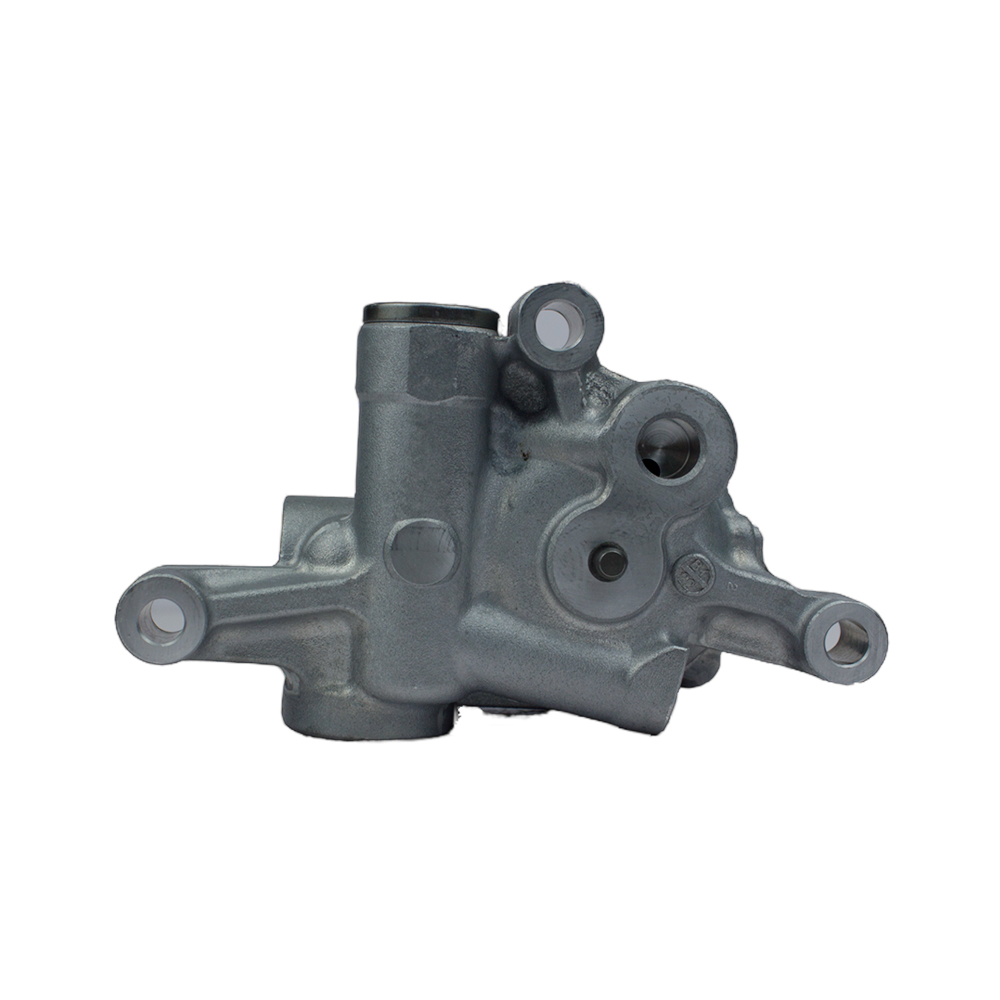
The thickness of a new Transmission Hard Parts is generally about 1.5cm. With the continuous friction during use, the thickness will gradually become thinner. Oil Pump are generally checked every 3,000 kilometers. If the friction block of the Transmission Hard Parts is found to be less than 3 mm, it needs to be replaced. (Generally speaking, it is replaced every 30,000-40,000 kilometers). And the newly replaced Transmission Hard Parts also needs a certain running-in period to effectively play its braking role.
There is a protruding mark on both sides of each Transmission Hard Parts. The thickness of this mark is about 2-3 mm, which is also the limit of the thinnest replacement of the brake disc. If the thickness of the Transmission Hard Parts is parallel to this mark, the Transmission Hard Parts must be replaced.
When the Transmission Hard Parts is worn to the extreme position, the alarm plate will contact the brake disc "and produce a continuous warning noise." But this thing is simple but unreliable and inaccurate. Therefore, when the thickness of the Transmission Hard Parts is close to this mark, the owner must observe at any time to replace the Transmission Hard Parts. I believe that many car owners have encountered abnormal noise when stepping on the brake, but there are still many cases of going to the repair shop to check the Transmission Hard Parts.
Due to the design of the wheel hub, some models cannot be checked with the naked eye and need to remove the tire to complete. The inspection method is different for different models. Generally, a strong flashlight is required. The line of sight is at a 15° angle to the wheel hub plane. Look at the gap between the Transmission Hard Parts and the brake disc. You should be able to see the thickness of the Transmission Hard Parts. It is completely based on visual observation. It takes certain skills to see the degree of wear of Oil Pump. If you can't see it, try to change the observation angle.
If you see that the thickness of the Transmission Hard Parts is less than 3mm, it must be replaced. Some car owners feel that 3mm is still very thick and they can still run XX kilometers, but in fact, the last 3mm of the Transmission Hard Parts is a viscose layer, which is much harder than the friction material in front. If the front and back are worn unevenly, continued use will seriously damage the brake disc, even if there is an Transmission Hard Parts alarm device. Compared with brake discs, Oil Pump are much cheaper.
According to the vehicle environment and driving habits, Transmission Hard Parts brands do not have strict replacement intervals. Generally, replacement should be considered after driving about 60,000 kilometers. Oil Pump should be checked every 3,000 kilometers in the future. Because there will be errors in naked eye observation, to check the accurate degree of wear of Oil Pump, you should go to a professional car repair station to use a caliper, which is more rigorous than naked eye observation.
There is a protruding mark on both sides of each Transmission Hard Parts. The thickness of this mark is about 2-3 mm, which is also the limit of the thinnest replacement of the brake disc. If the thickness of the Transmission Hard Parts is parallel to this mark, the Transmission Hard Parts must be replaced.
When the Transmission Hard Parts is worn to the extreme position, the alarm plate will contact the brake disc "and produce a continuous warning noise." But this thing is simple but unreliable and inaccurate. Therefore, when the thickness of the Transmission Hard Parts is close to this mark, the owner must observe at any time to replace the Transmission Hard Parts. I believe that many car owners have encountered abnormal noise when stepping on the brake, but there are still many cases of going to the repair shop to check the Transmission Hard Parts.
Due to the design of the wheel hub, some models cannot be checked with the naked eye and need to remove the tire to complete. The inspection method is different for different models. Generally, a strong flashlight is required. The line of sight is at a 15° angle to the wheel hub plane. Look at the gap between the Transmission Hard Parts and the brake disc. You should be able to see the thickness of the Transmission Hard Parts. It is completely based on visual observation. It takes certain skills to see the degree of wear of Oil Pump. If you can't see it, try to change the observation angle.
If you see that the thickness of the Transmission Hard Parts is less than 3mm, it must be replaced. Some car owners feel that 3mm is still very thick and they can still run XX kilometers, but in fact, the last 3mm of the Transmission Hard Parts is a viscose layer, which is much harder than the friction material in front. If the front and back are worn unevenly, continued use will seriously damage the brake disc, even if there is an Transmission Hard Parts alarm device. Compared with brake discs, Oil Pump are much cheaper.
According to the vehicle environment and driving habits, Transmission Hard Parts brands do not have strict replacement intervals. Generally, replacement should be considered after driving about 60,000 kilometers. Oil Pump should be checked every 3,000 kilometers in the future. Because there will be errors in naked eye observation, to check the accurate degree of wear of Oil Pump, you should go to a professional car repair station to use a caliper, which is more rigorous than naked eye observation.